ART IN THE AGE OF SOCIAL MEDIA

The issue of morality in the partial presentation of artworks on social media raises significant concerns related to censorship, the visibility of artists, and the public reception of artworks.
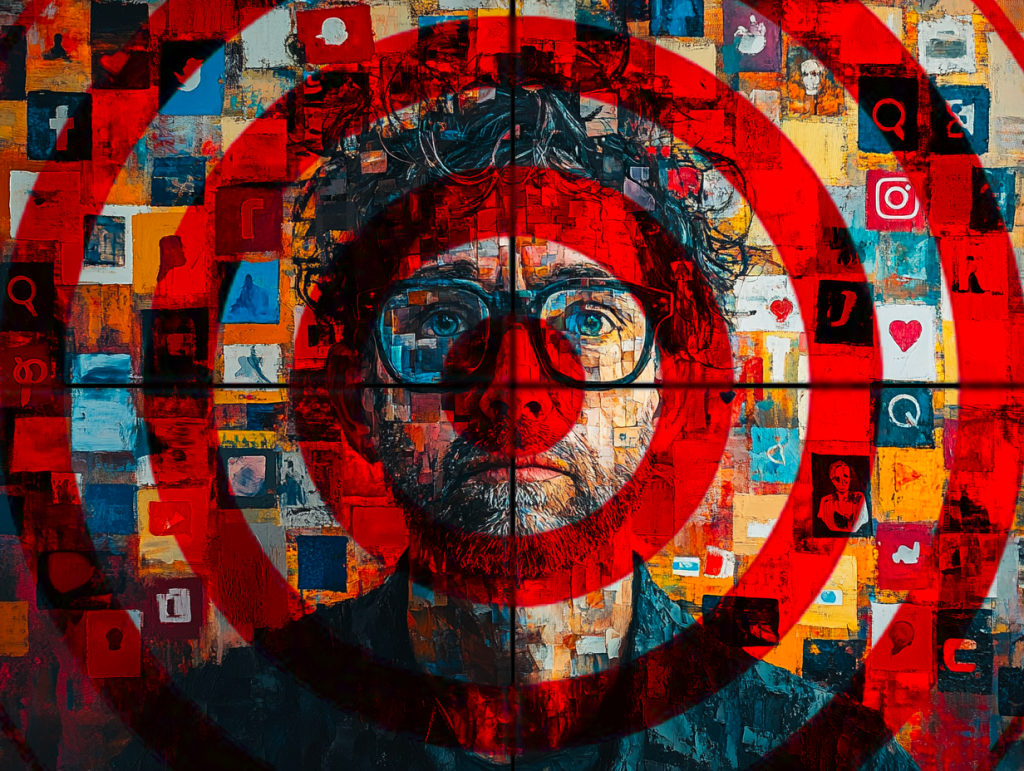
The artist in the social media world is a target…

Arbitrariness
Censorship on social media, as highlighted by the Académie des beaux-arts, often occurs arbitrarily, without distinguishing artworks from other content, thereby hindering the promotion of art on these platforms.
Last summer, Miriam Cahn‘s painting exhibited at the Palais de Tokyo, Paris was pornographied by showing only a part of it on social media. This practice ignores the spatial context of the painting and its exhibition setting, reducing the fragment to the whole artwork.
This situation highlights a tension between platform policies and the freedom to disseminate art, calling for a reflection on ways to protect this freedom, and perhaps a skepticism towards contemporary art.

READ MORE

EDU: Yves Saint Laurent, une marque anti-bourgeoise et scandaleuse !

Survol du cours réflexif #4 sur l’IMAGE

Pouvoir et la subjectivité de l’IMAGE.
L’IMAGE a d’abord été utilisée pour combler les aspects invisibles de notre quotidien dixit l’inventeur de la médiologie Régis Debray.
Ainsi dans l’Égypte antique, le Livre des Morts décrivait le royaume des morts, permettant ainsi de donner une représentation visuelle à un espace invisible.
L’IMAGE comble un vide et stimule notre imagination, contribuant ainsi à accroître notre connaissance.

CECI N’EST PAS UNE ŒUVRE D’ART

L’IMAGE, même imparfaite, tire sa force de son pouvoir de communication et de suggestion, sans dépendre des normes linguistiques.
Un enfant de trois ans, incapable de lire, peut décrire ce qu’il voit dans une IMAGE.

Lire la suite « EDU: Yves Saint Laurent, une marque anti-bourgeoise et scandaleuse ! »