The issue of morality in the partial presentation of artworks on social media raises significant concerns related to censorship, the visibility of artists, and the public reception of artworks.
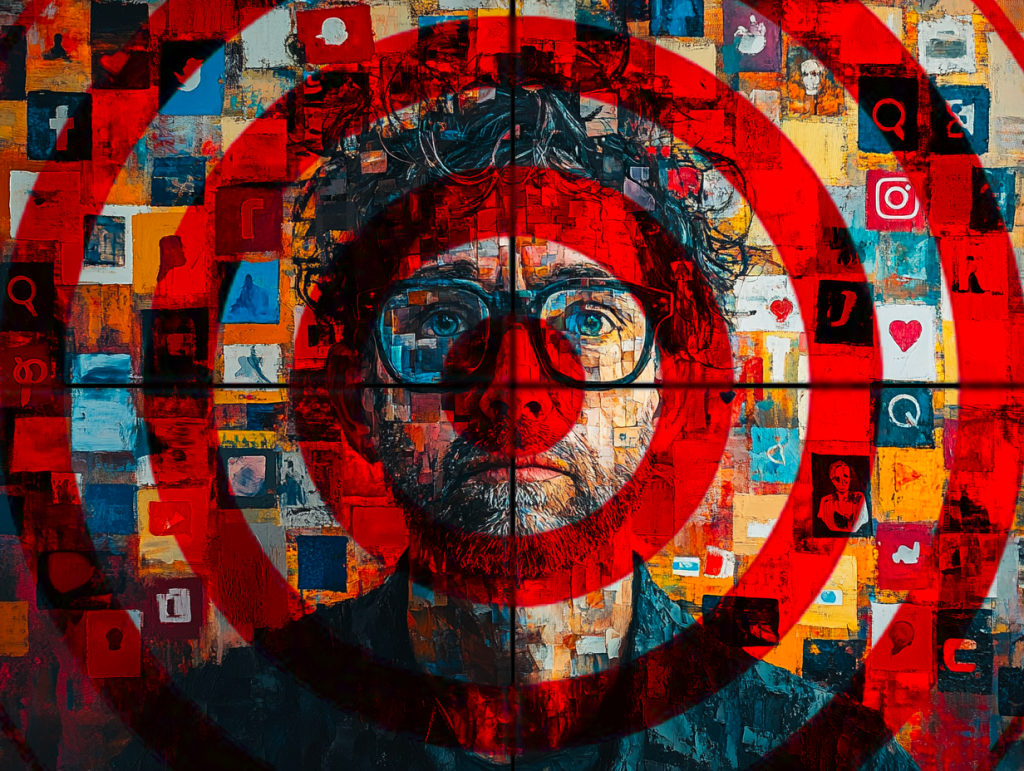
Arbitrariness
Censorship on social media, as highlighted by the Académie des beaux-arts, often occurs arbitrarily, without distinguishing artworks from other content, thereby hindering the promotion of art on these platforms.
Last summer, Miriam Cahn‘s painting exhibited at the Palais de Tokyo, Paris was pornographied by showing only a part of it on social media. This practice ignores the spatial context of the painting and its exhibition setting, reducing the fragment to the whole artwork.
This situation highlights a tension between platform policies and the freedom to disseminate art, calling for a reflection on ways to protect this freedom, and perhaps a skepticism towards contemporary art.
Visibility
On the other hand, social media provides artists with unprecedented visibility, allowing them to present their work and interact directly with their audience. These platforms can serve as an exchange and information showcase, complementing or replacing traditional media.
Self-Censorship
However, this visibility can also come with constraints, pushing artists to alter their practices, restrict their creative activity, or even abandon their intellectual defenses under social media pressure.
The partial representation of artworks on social media, often driven by format or audience engagement considerations, can contribute to a fragmented understanding of art, where the space and context of the original work are neglected.
Hyperconnection
This practice reflects a broader trend of hyperconnection and accelerated content consumption, characteristic of our hypermodern era, raising questions about the nature of aesthetic experiences offered by social media.
Perspectives
Facing these challenges, it is essential to develop a critical approach to the presence of art on social media, considering both the opportunities and limitations of these platforms for artistic creation and dissemination. Reflection should focus on how artists can navigate this ecosystem to maintain the integrity of their works while exploiting the visibility and interaction possibilities offered by social media.
Art can provoke through transgression, but is it responsible? Does it commemorate, or is that duty ours?
 lemodalogue.com