
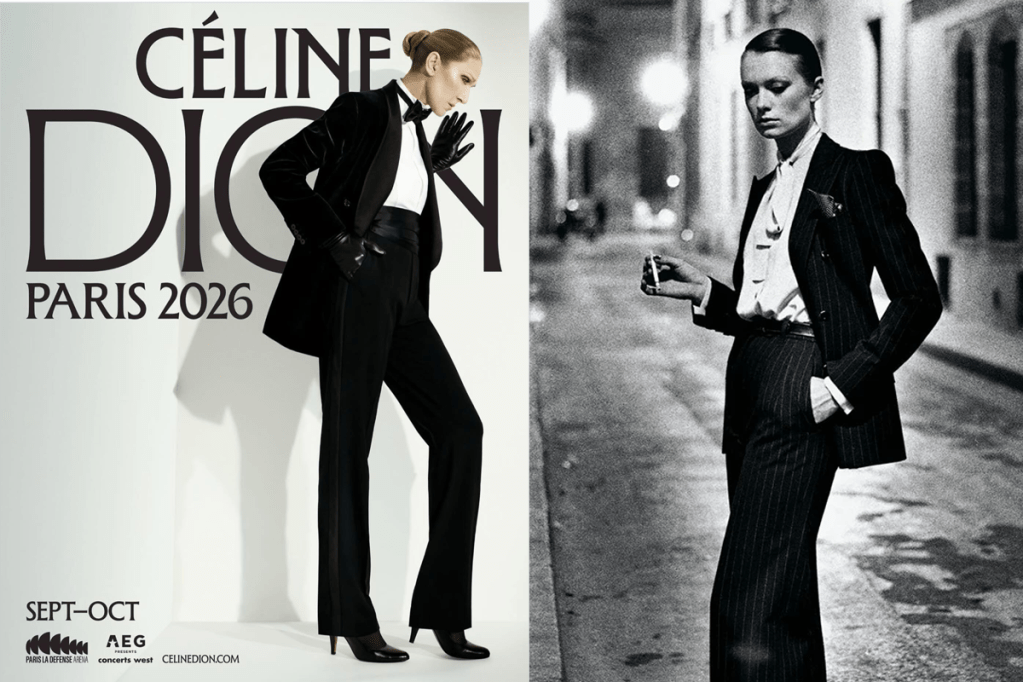
It is difficult not to think of Yves Saint Laurent’s Le Smoking, photographed by Helmut Newton for Vogue Paris in 1975. The same visual code is at work: a woman in masculine tailoring, slicked-back hair, a white shirt, an authoritative silhouette.
Some images exceed their primary function. They do not simply inform, announce or document, They become symbolic.
This happens in politics. It happens in social history. It also happens in fashion.
That is precisely what Céline Dion’s latest parisian concert’s campaign seems to do.
At first glance, the posters announce a series of concerts. But the three images activate something else: a visual memory of fashion, authority and icon-making.
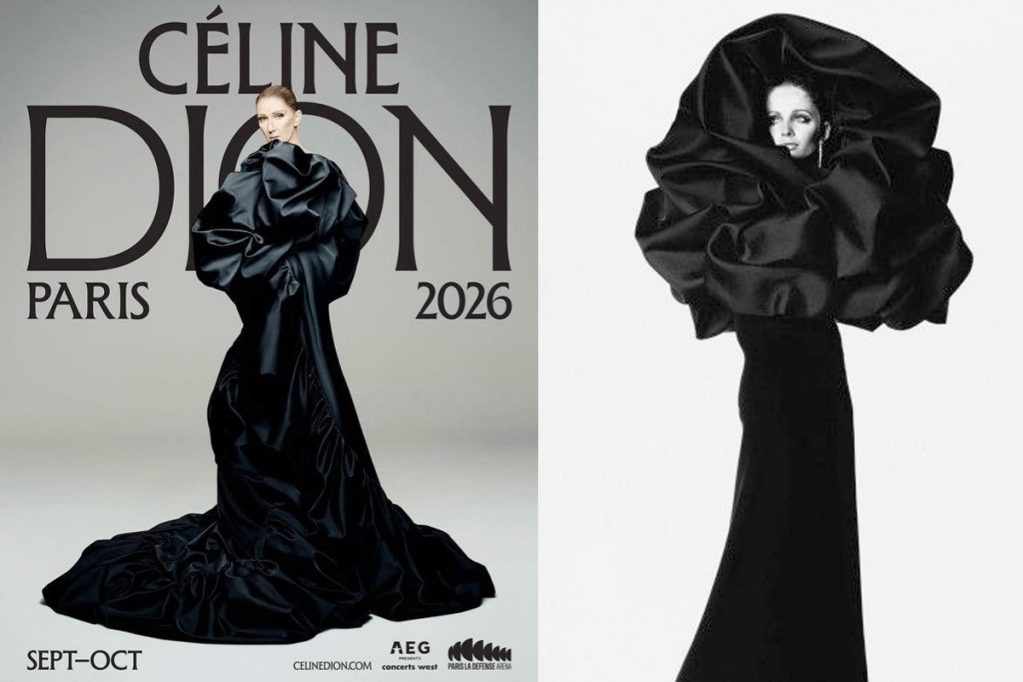
This image recalls Sue Murray in Balenciaga, photographed by Irving Penn for Vogue in 1967: the evening silhouette, the dramatic black volume, the body almost absorbed into couture architecture.
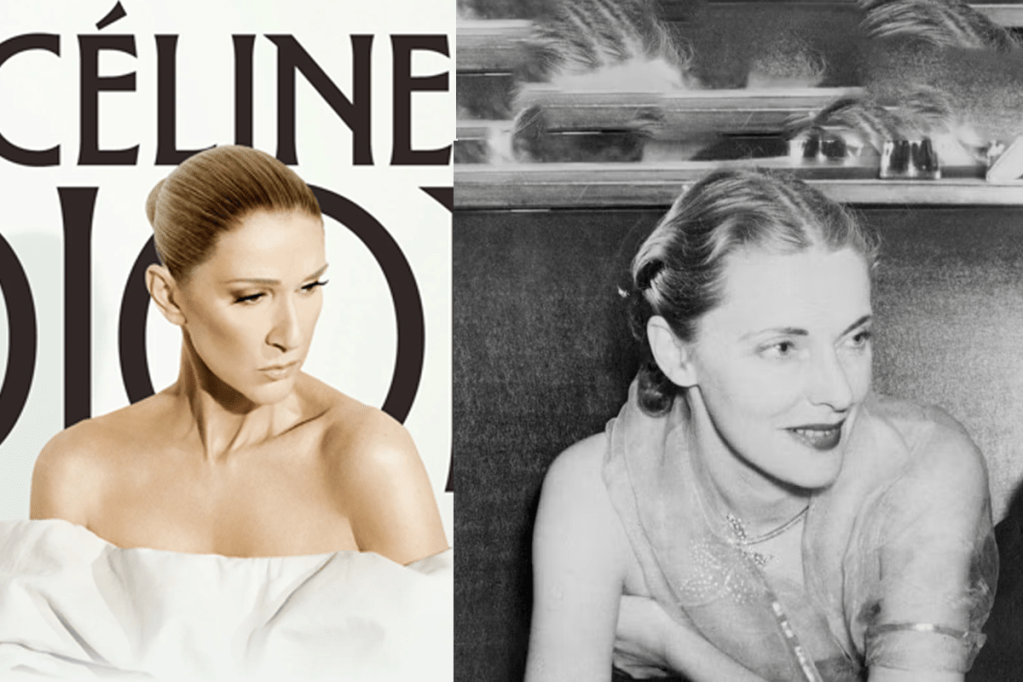
The third visual relies less on an identifiable garment than on a culture of portraiture. Bare shoulders, an elongated neck, a sideways gaze, an aristocratic elegance. One thinks of a certain American society beauty from the 1950s and 1960s, embodied by figures such as Slim Keith or Marella Agnelli — the women Truman Capote famously called his “Swans.”
One question remains:
Will Céline Dion’s fans recognise these references?
Or perhaps the real question is different: why choose this visual language to announce a return to the stage?
This campaign is not only promoting concerts. It is repositioning Céline Dion as an icon. Not merely as a popular voice, but as a figure of fashion, discipline and sovereignty.
The poster becomes a visual apparatus of authority. Clothing is not used here simply to dress the body. It builds the narrative. It turns Céline Dion into a statuary figure.
 lemodalogue.com